
Tesla Model S Completes Driverless Cannonball Run
This week for the first time ever, an automobile has driven itself across the United States. A 2024 Tesla Model S, operating solely on the company’s Full Self-Driving software, has completed the legendary Cannonball Run from coast to coast without a single human intervention. This inaugural zero-intervention journey, spanning 3,081 miles from Redondo Beach, California, to Midtown Manhattan in 58 hours and 22 minutes, was piloted by a team led by veteran driver Alex Roy, with co-drivers Warren Ahner and Paul Pham. It stands as a historic technical milestone, realizing a promise Elon Musk first made nearly a decade ago, with the entire trip captured on camera for verification.
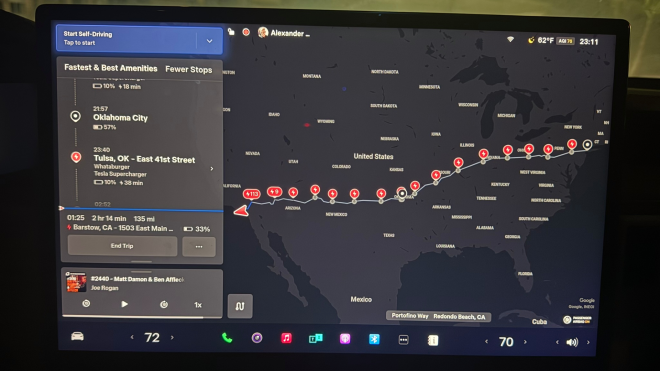
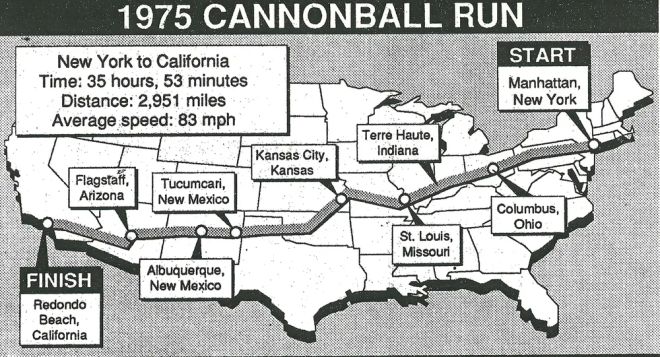
The feat is undeniably a technical spectacle. Navigating through snow, ice, and the unpredictable tapestry of America’s interstate system, the vehicle maintained an average speed of 64 mph. It managed charging stops, complex traffic merges, and even executed a detour to aid a stranded teammate, all under the control of FSD version 14.2.2.3. Cameras documented the journey, aiming to verify the claim and fulfill a promise Elon Musk made back in 2016 that such a trip was imminent.
Yet, in the tradition of clear-eyed analysis, we must separate the milestone from the marketing, the demonstration from daily reality. The Cannonball Run is a curated experiment, a high-stress test conducted by expert drivers under intense scrutiny. Its success is a powerful proof of concept, a beacon of what the technology is capable of. However, it exists in a rarefied atmosphere, far removed from the experience of the average owner who may still experience jarring disengagements on a routine commute to the grocery store.
Furthermore, the triumph comes with its own caveats that temper the narrative of seamless autonomy. The vehicle spent 10 hours and 11 minutes of the journey stationary—not driving, but charging. This critical detail underscores that the largest hurdle for electric vehicles on such marathon journeys remains logistical, not just software-based. The "self-driving" car, for all its intelligence, remains utterly dependent on a human-constructed network of charging infrastructure and the patience of its passengers.
This achievement arrives at a moment of intense scrutiny for Tesla’s autonomous ambitions. It builds upon recent software updates hailed by some owners as revolutionary, even as federal regulators maintain investigations into the system's safety profile and real-world performance. All the while, Tesla Robotaxis have just gone live to the public in Austin, Texas. The Cannonball success story is a potent piece of evidence in Tesla’s favor, but it does not erase the fundamental questions that have dogged this technology: not can it be done once, but can it be done safely, reliably, and for everyone, every day?
The drive from Los Angeles to New York is a powerful metaphor. It represents a long-held ambition, a crossing of a continent, and the closing of a gap between promise and proof. Alex Roy’s team has shown that the car can, under specific and prepared conditions, make that crossing. The far more difficult task—the task that truly matters—is ensuring the technology can safely navigate the complex, short, and deeply personal journeys that make up our daily lives. That is the destination that remains on the horizon.
The Cannonball Run is a remarkable engineering log entry that proves the final report on autonomy will be written not on empty interstate highways, but on the crowded, chaotic, and profoundly human streets where trust is built one safe, uneventful trip at a time.
HOME | NATIONAL | HEALTH / LIFESTYLE | FINANCE | SPORTS | TECH | MUSIC / ENTERTAINMENT | OPINION